Waking up this morning was a little slower than the past few days, so I went down to breakfast when there were no more guests in the room.
A cup of tea and I got into the car with Yado to reach Johdpur, the unscheduled stop that was suggested to me by Rafiq, the Delhi guide who helped me organize the tour. As it was a very long journey, five hours in all, I did not want to delay any longer and gave up drinking coffee at the hotel, asking Yado to stop as soon as possible for a very short stop.
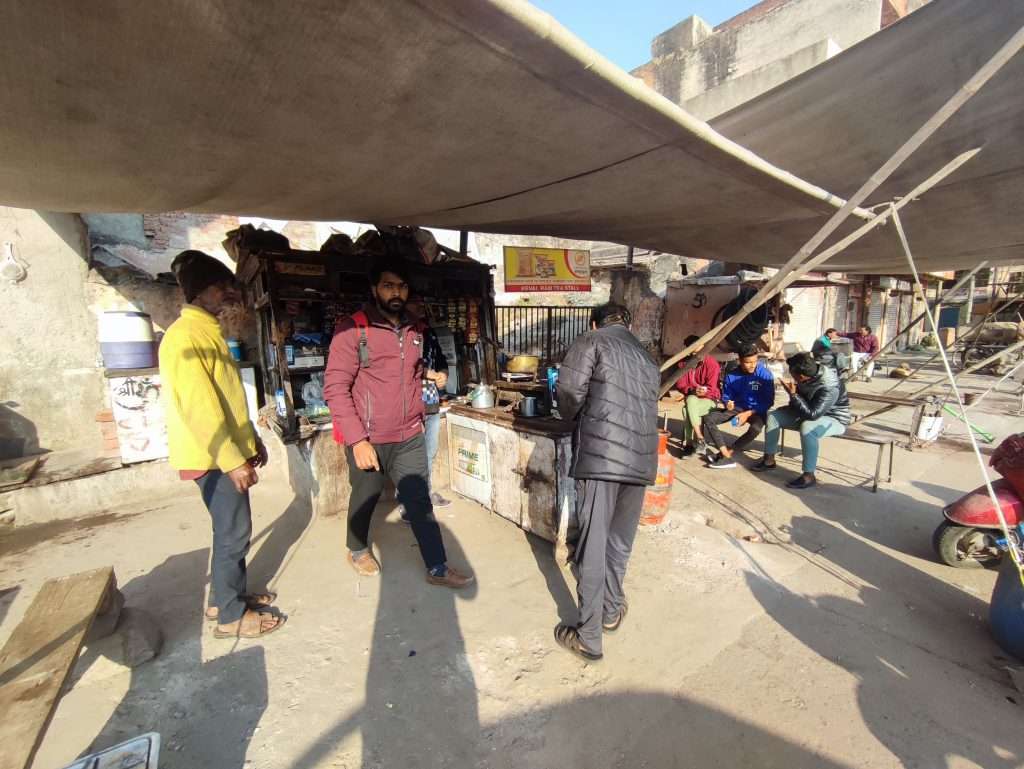
The place he chose was a coffee shop that only sells freshly brewed tea and coffee using pots that I believe have never been in contact with detergent, as well as the cups.
The coffee, however, was essential, and so I made the ‘sign of the cross’ and drank it without thinking too much about it.
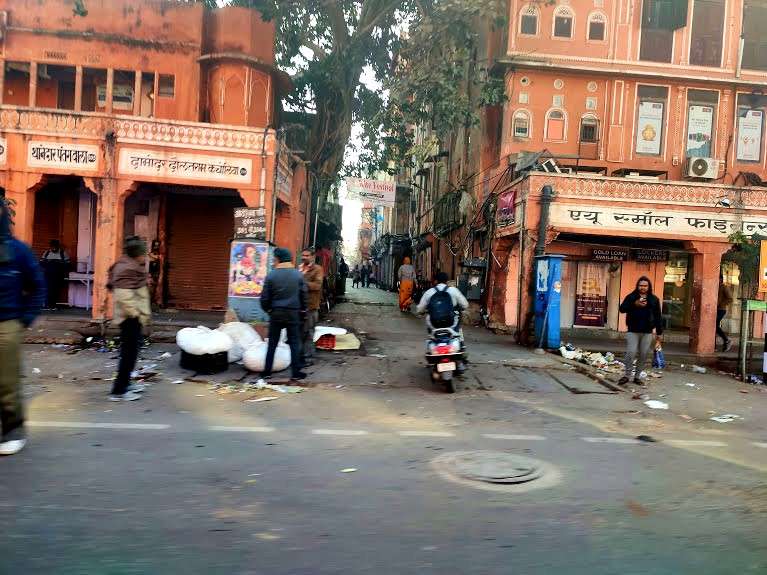
On our way out of Jaipur we passed by the Hawa Mahal, the Palace of the Winds, and also went through all the alleys I had wandered into last night. When I recognized the one where I bought the Toppi, the Turkish headdress I was wearing today, I confirmed the impression I had had yesterday, a bad place!
On the drive from the city to the highway, I saw scenes that stunned me and left me feeling so sad. An endless amount of people living in the open, on the streets, in rubbish fields, using improvised camping tents made of black plastic sheets like the ones used for rubbish. I saw a child sitting in the middle of a rubbish dump, next to him two cows looking for food among the rubbish, the highway no more than twenty meters away. These are scenes that you don’t see in the movies and cannot even be imagined, you have to see them with your own eyes to believe them.
The hysterical traffic on the outskirts of Jaipur is even worse than in Delhi, and after ten minutes of deafening noise, mostly generated by the incessant honking of horns, one feels a sense of nervousness and annoyance that does not rest until one leaves the city.
Entering the freeway, the landscape has become monotonous and deserted, and the only thing I still find hard to conceive of are the cows crossing the road or even standing in the middle of the carriageway to sprout from the tops of the shrubs growing on the central flowerbeds separating the two directions. In addition to being bizarre to say the least, it is also extremely dangerous because they happen to be in front of you after making a bend, with reduced visibility. Bumping into an animal of that size, stationary in front of the car, can do serious damage to the vehicle but is undoubtedly a risk to the safety of those inside. The roads are not conducive to extreme speeds, at best you can travel at 90/100 Km/h, but already at over 50 Km/h such an impact would be fatal.
One must be careful, proceed calmly and be very responsive at all times. In any case, we travelled one hundred kilometers without stopping and without encountering any cars other than a few vans.
When we stopped at the rest area to get something to eat and use the facilities, I realized that India is almost totally lacking in public infrastructure. There is no protection and no barriers to prevent pedestrians from crossing the road, to give an example, and the population is forced to live a normality that has very little that is normal.
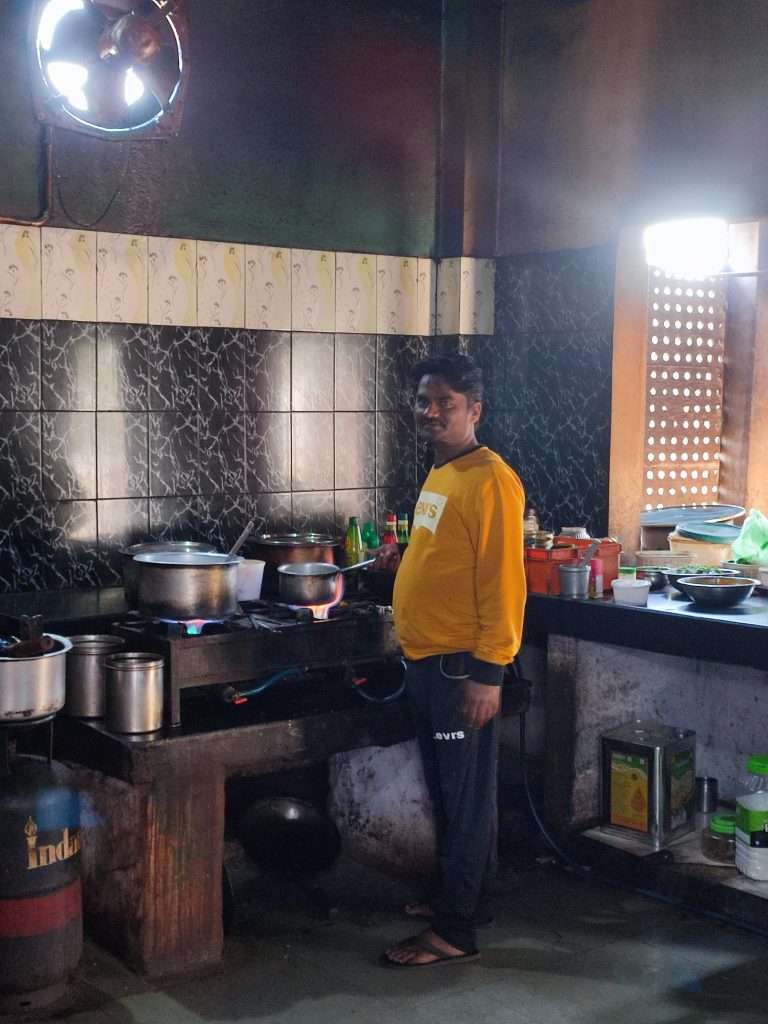
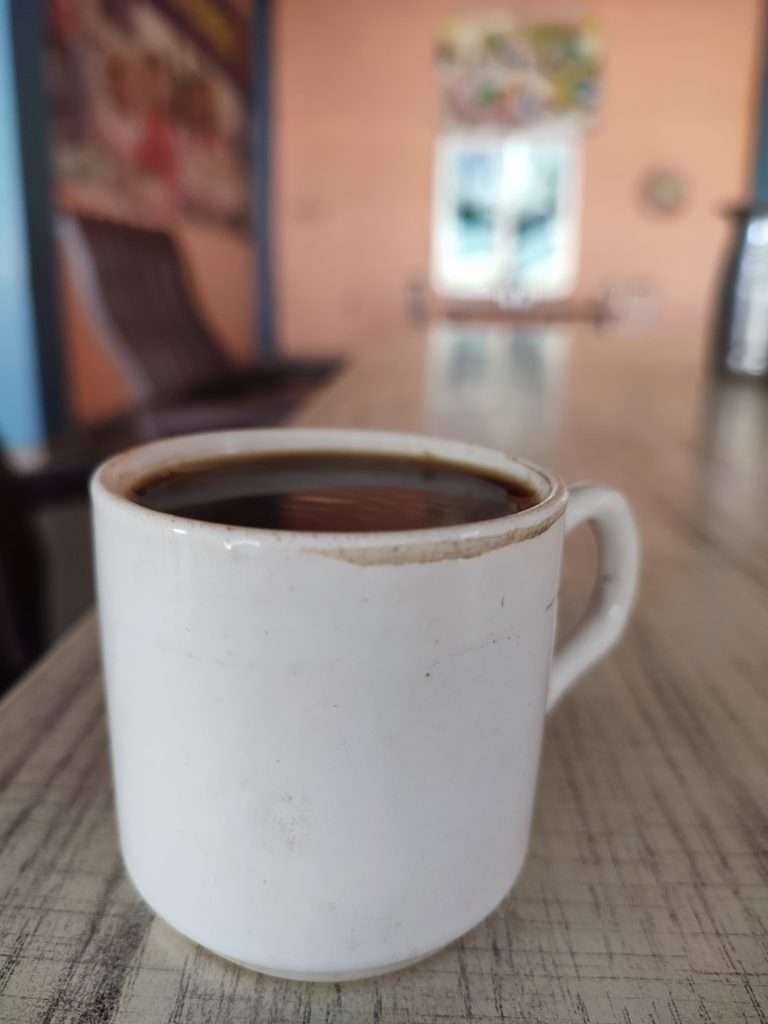
Yado ordered a cup of tea, and so I felt like having another cup of coffee, approached the kitchen of the café where I had bought some junk food and felt a sense of solidarity and closeness towards the poor wretch who uses it every day. Take a look at the photo and judge for yourself.
The waiter brought me the cup, placing it on the table where we were sitting. The rim was brown and this time I didn’t feel like it, so I asked him for a plastic cup and poured it there.
I needed to use the restroom, which was 30 meters away in the middle of a dirt field. I wanted to wash my hands, but when I went inside I turned on my heel and came out because in a place like that there was a real possibility that my hands would come out dirtier than they were when I went in.
This is what India is all about and even though I have only been here for four days, it is quite clear to me that the rest of the cities I visit will be no better than this one.
I want to be clear with anyone considering coming here on holiday: you have to leave with the knowledge that the only way to stay here for a long time is to adapt to indefinable and unbelievable standards of hygiene. If you can overcome the impact with this huge difference, then you can get into the right mood to appreciate the good things, which are certainly not lacking.
I have never been to Thailand, so I cannot make comparisons, but I have been to China and in that respect I consider it two levels higher than India.
Of the rest of the car journey I have little to report, except for the stop at the restaurant where I decided to buy lunch for Yado, who would otherwise have eaten in the back with other drivers.
I ate some very good things, those who had a chance to look at today’s stories on Instagram were able to see them. The dishes are more or less always the same, with a few variations on some spices to make them more palatable to tourists who do not tolerate too high levels of chili.
We didn’t stay long, we both had the desire to get to our destination as quickly as possible, so we got going again after about half an hour.
I listened to music with earphones, Yado on the other hand talked on the phone with his colleagues and his family, without losing sight of the road.
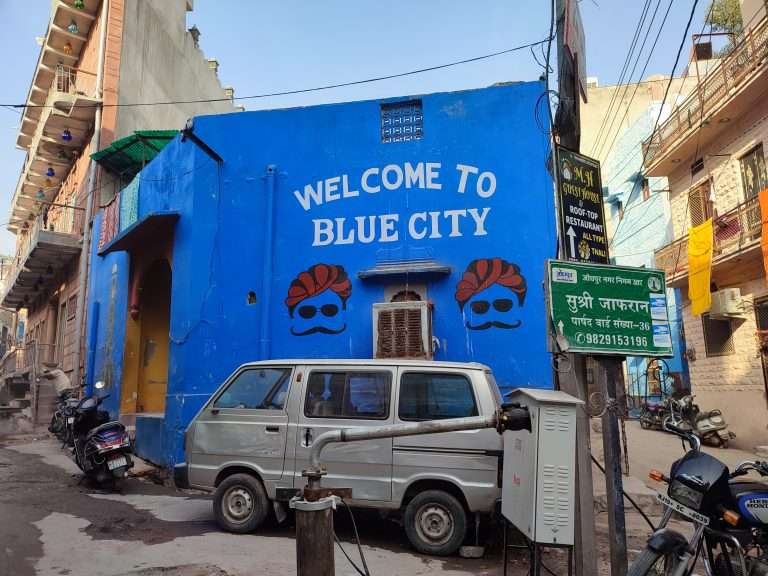
On arrival in Jodhpur, we found ourselves in a maze of narrow dirt roads, so narrow that at times it seemed as if we could not drive into them.
I wanted to take a thousand photos of the shops and shopkeepers because I had the feeling that I had travelled back in time at least 100 years. I have a hard time even describing them because they are so far removed from anything I have ever seen before. For example, there was a bicycle mechanic inside a hole, literally, in the wall of a house. A 5 square meter recess, no more than that, just enough space to fit a bicycle, a stool and some tools.
A shop selling local food, fried food mostly, which only had a display window and a very narrow aisle behind it could only fit one person, but the most absurd thing was that there was no space in front of customers, who were therefore forced to stand in the street while they waited to be served, thus preventing cars from passing.
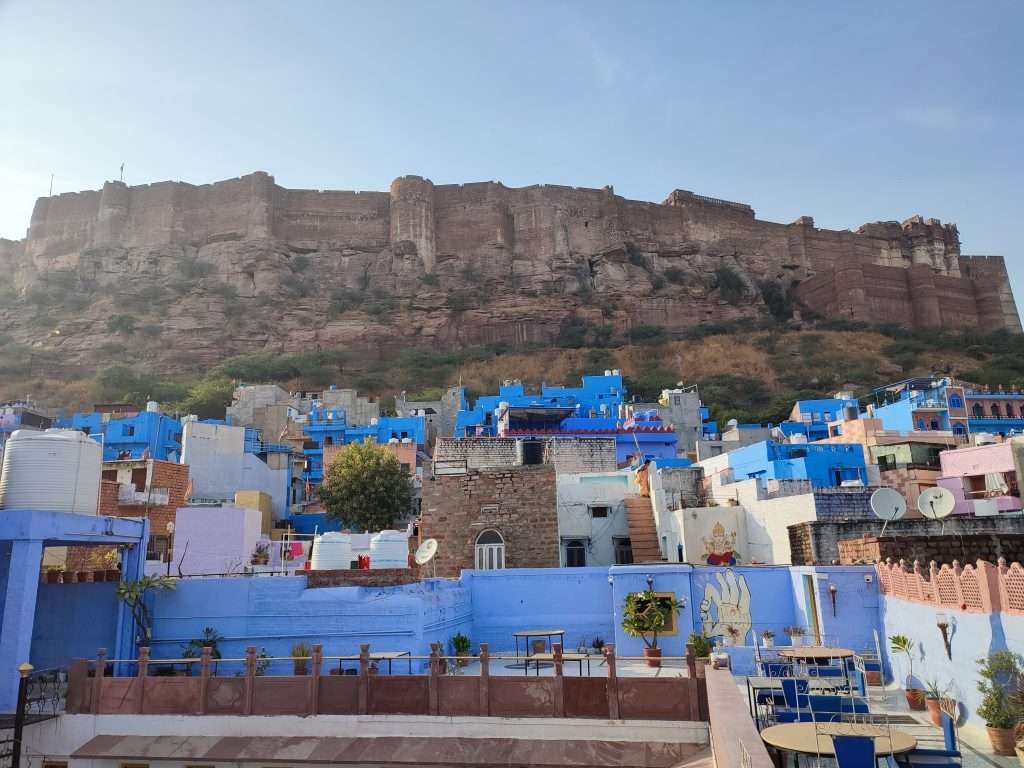
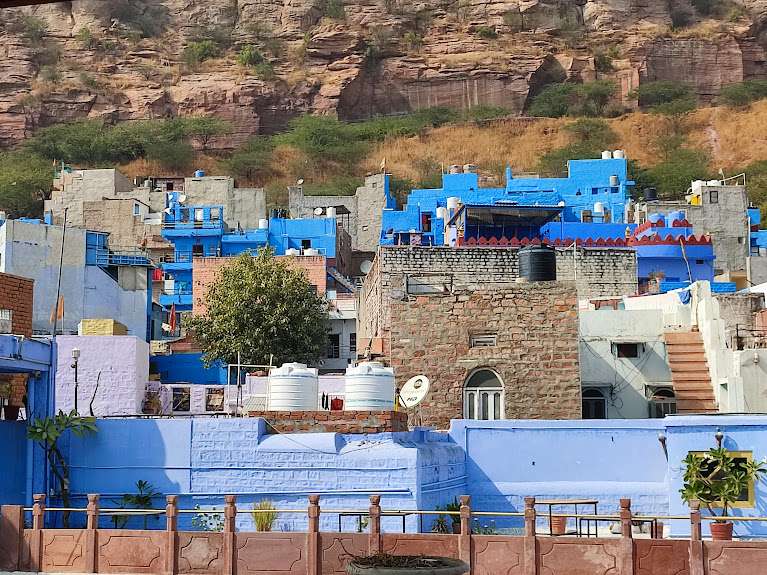
Yado has worked here several years and knows the city, but he too got lost in looking for the hotel and had to ask the locals for information. Just before arriving at the car park, the first blue houses, typical of the city, began to appear, and I was very relieved when I took possession of my room, cozy and cleaner than the previous ones I had slept in over the past few days. The hotel is also equipped with a roof terrace, which in the evening provides a not bad atmosphere, from which one can admire the Mehrangarh Fort in all its grandeur.
It will be tomorrow morning’s visit together with the Kunjebehari Temple dedicated to Krishna and the Sardar Market as well as a stroll through the streets of the old city, amidst the blue buildings.
It was just after five o’clock when Yado suggested that we take a walk to the clock square, close to our hotel, to visit a spice shop that is very famous throughout the state. It seemed a little too emphatic, but I decided to accept the suggestion, and we headed towards the city center.
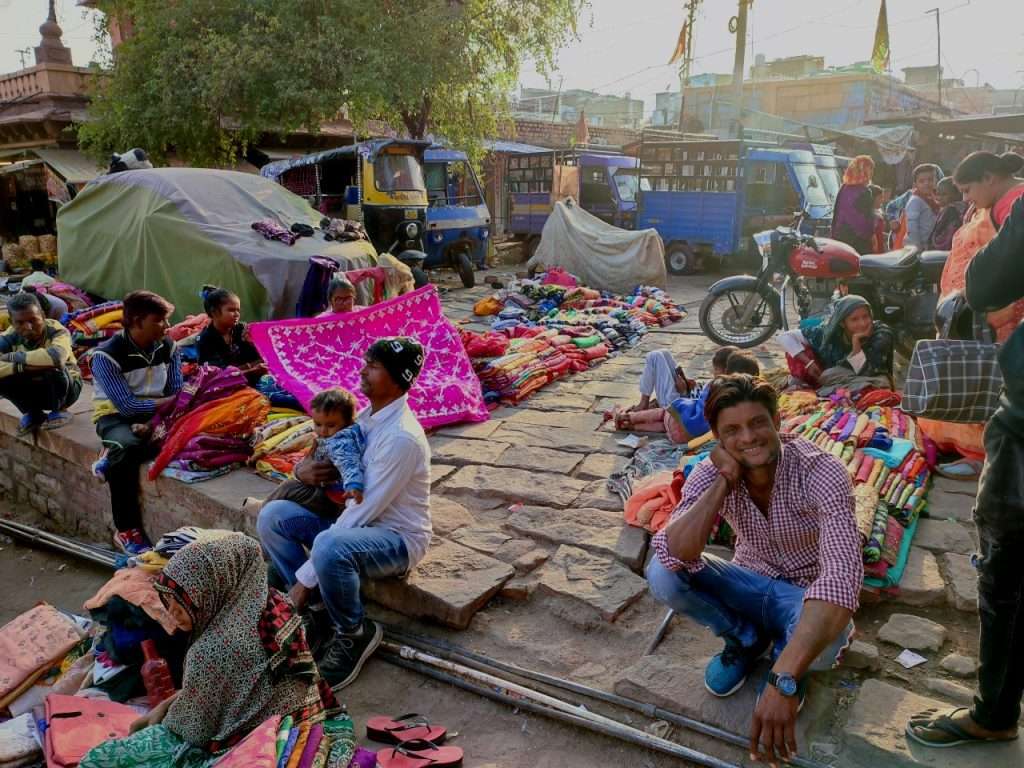
We passed the first corner and found ourselves in the middle of an open-air market, at least as busy as Jaipur, packed with shops and street vendors.
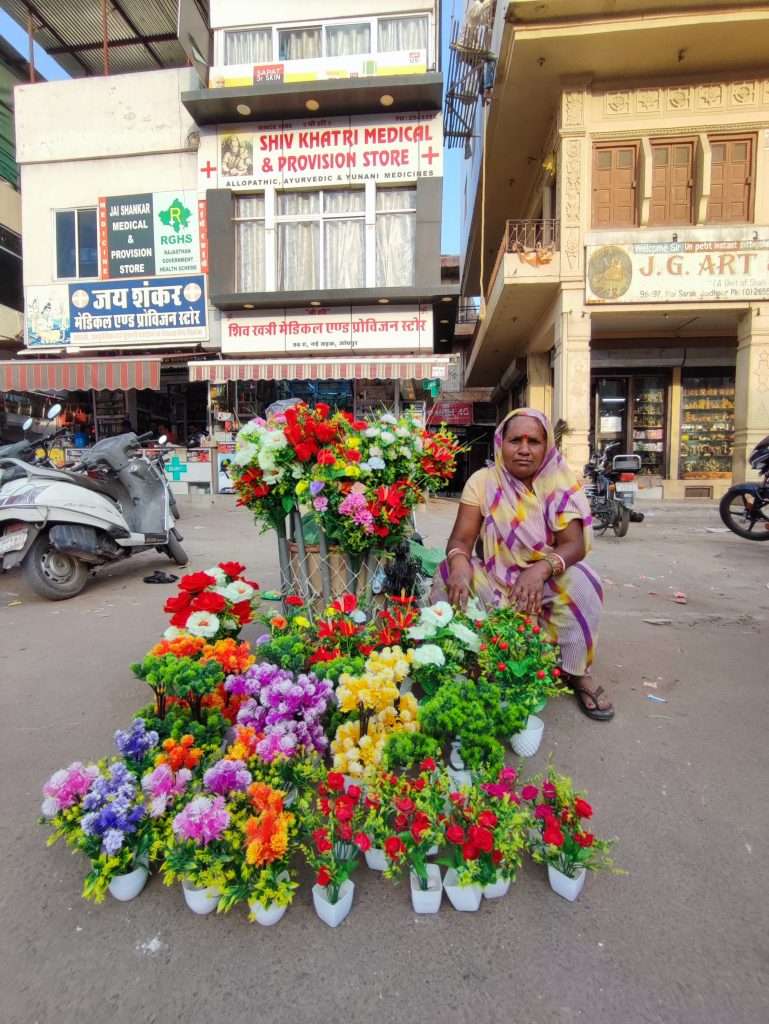
The bright colors of the fabrics and flowers broke the monotony of the clay red of the surrounding buildings.
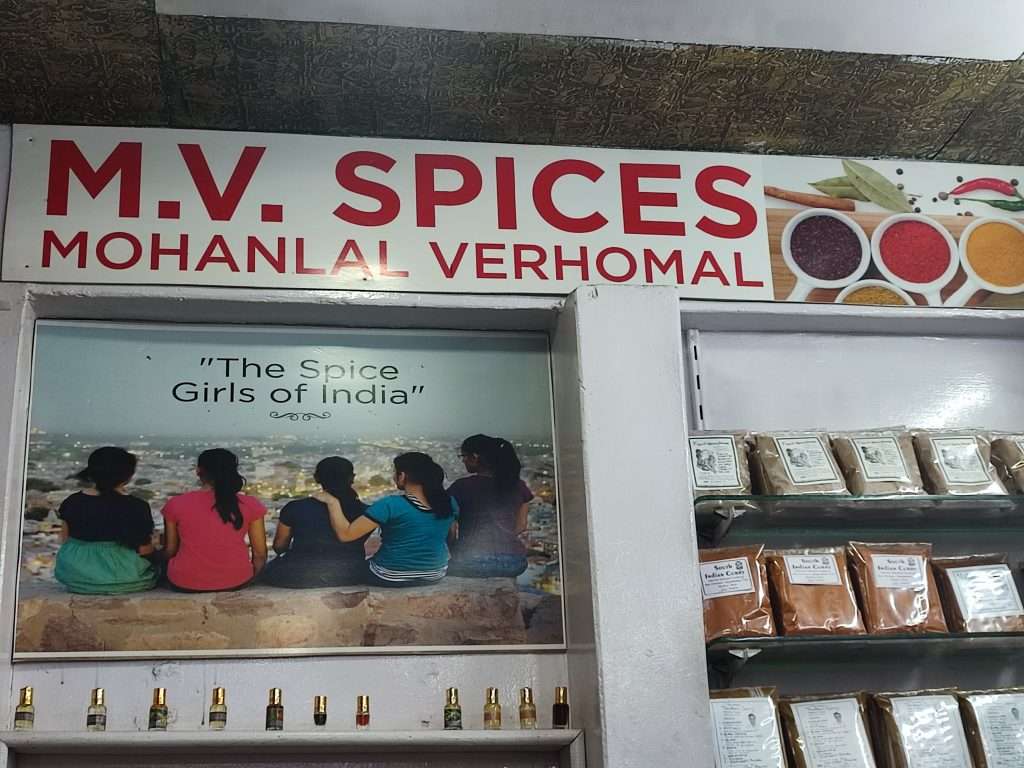
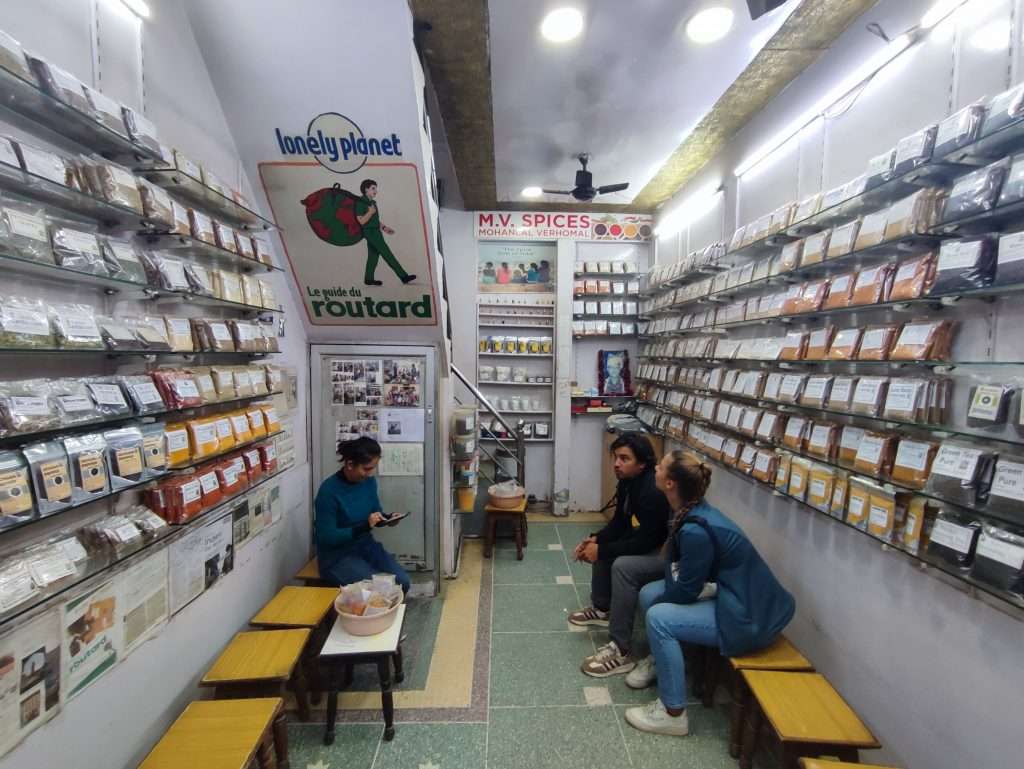
The spice shop was not far away and in less than five minutes we reached it. I expected a huge shop, and instead it is also very small, but with a selection of spices and teas that caught me off guard. Its history is even more astonishing because it is a business started in the 1970s by a gentleman who answered to the name of Mohanlal Verhomal, father of seven daughters, who sold a very small selection of home-made spices, from his parents and relatives who handed down very old family recipes.
It all started with a handful of these precious mixtures, laid out on a sheet at the foot of the fort’s walls, quickly becoming a reference for the locals and a unique opportunity to bring a bit of India to the city’s tourists.
Mohanlal died very young and left his daughters at a very young age with his wife. Some were less than ten years old, so not of working age. The eldest daughter then decided to take over the reins of the business started by her father, arousing the protests of the townspeople who in those years did not conceive that a woman could do business, mocking her, belittling her abilities and prophesying failure in a very short time.
In that climate of hostility and mockery, it was the mother who forcefully imposed herself so that those malicious rumors would be silenced for good, declaring that her daughter had not only the skills but also the educational background to run the family business.
Today, that sheet lying on the floor has become a company that runs four shops and exports the same old blends all over the world. Seven sisters and a mother who have shown a city and the world that mocking a woman is never good business.
They call them the Indian Spice Girls, they were interviewed by the BBC and the Discovery Channel made a documentary about their story.
I knew none of this when I sat on the stool offered to me by Priya, the younger sister who now runs the shop in Johdpur. Next to me was Rob, an American guy who is touring India on his bike, and a little later Alexis and Clavy, a couple from France who are travelling through Asia, without a return date, without making too many plans, just going with the flow, joined me.
Go with the flow, what I started doing a few years ago and what I now consider to be the best attitude one can adapt to live life.
It was precisely because of this attitude that I didn’t hesitate for a second when Priya told me that the boys were going to the home of her older sister, Usha, for a three-hour Indiana cooking class. She didn’t even have to ask me, I had already agreed to join them.
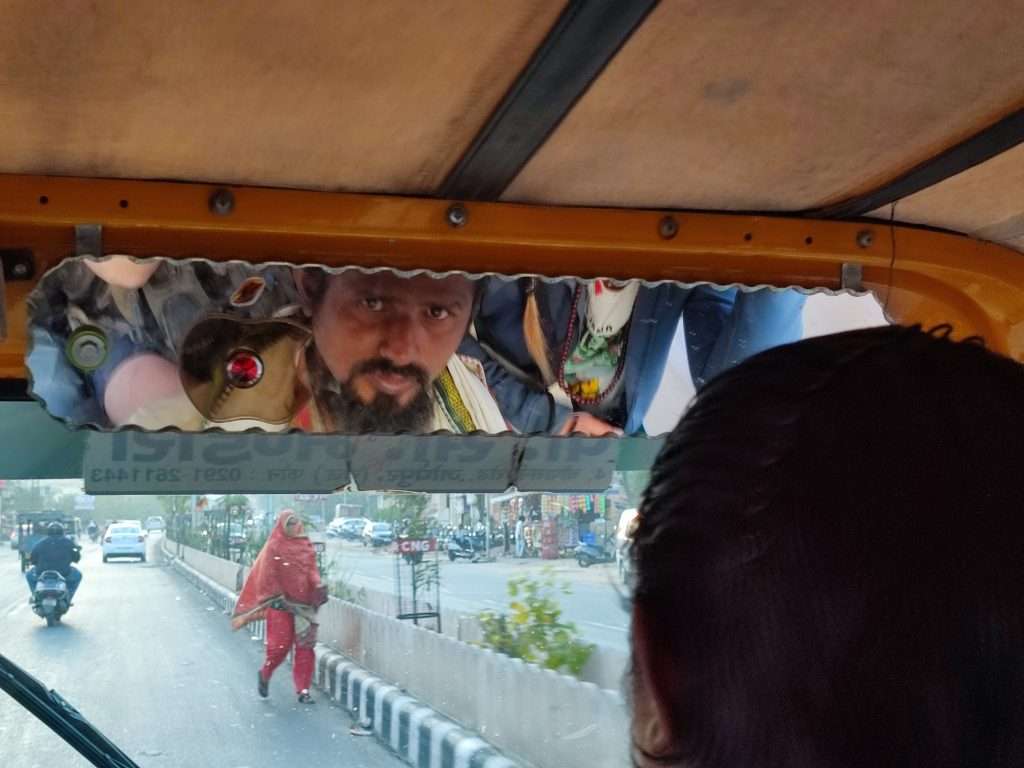
I said goodbye to Yado, who looked at me as if a madman who had just come out of the asylum had walked past him, and jumped into the Tuk Tuk.
In less than ten minutes, we were whizzing through the streets of Jodhpur, in a state of joy and exhilaration that oozed from every pore of our skin.
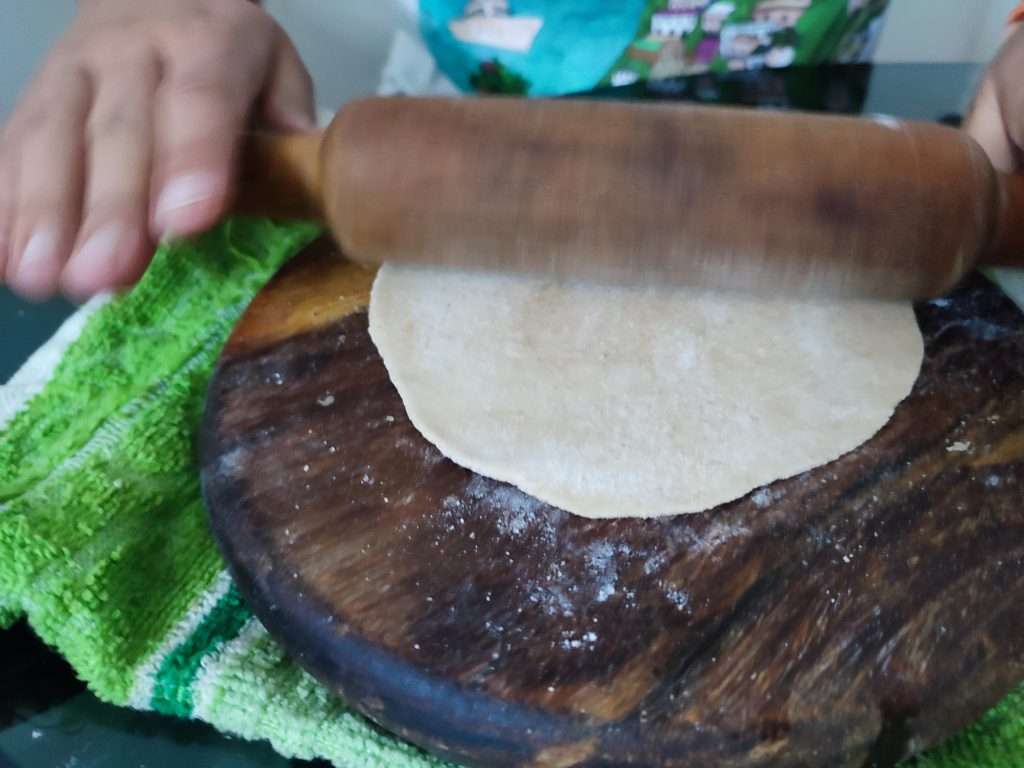
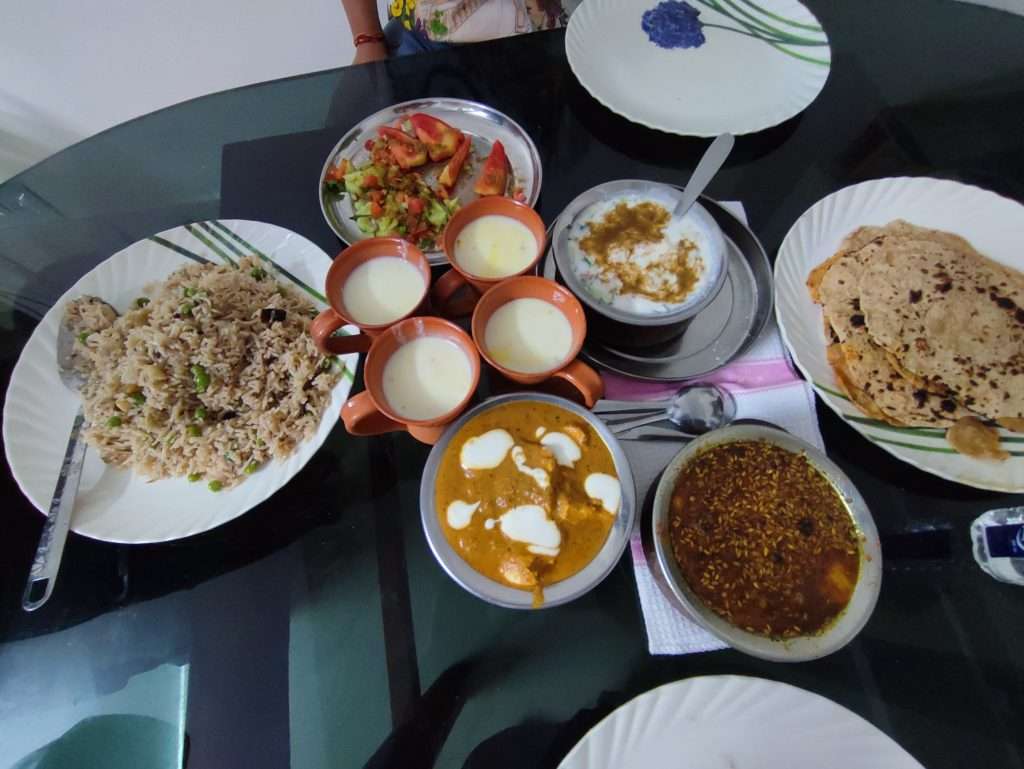
It was an intense, emotionally charged three hours during which we learned five recipes that we all made together and which were our dinner.
Dal which I ate several times, Chapati bread and its seasoned version called Parata, Paneer butter Masala (a spectacular thing!), Lauki Raita, the yogurt sauce which I had eaten on the first day in Jaipur and which I loved, and finally basmati rice with vegetables which I was able to learn to cook in the traditional Indian way. Oh I forgot, there is also a drink that is served as a dessert, made with yogurt, saffron and cumin, an explosion of flavors and traditions that I will replicate as soon as I can both at home and on the boat.
Once again, India’s true wealth lies in its people, not in the splendor of its gold-decorated palaces.
That’s all for today.
See you tomorrow!